
Operations 2 min read
Planning a heavy lift at the quay
A short planning routine for machinery, coils and project cargo: load, crane, ground, rigging and team.
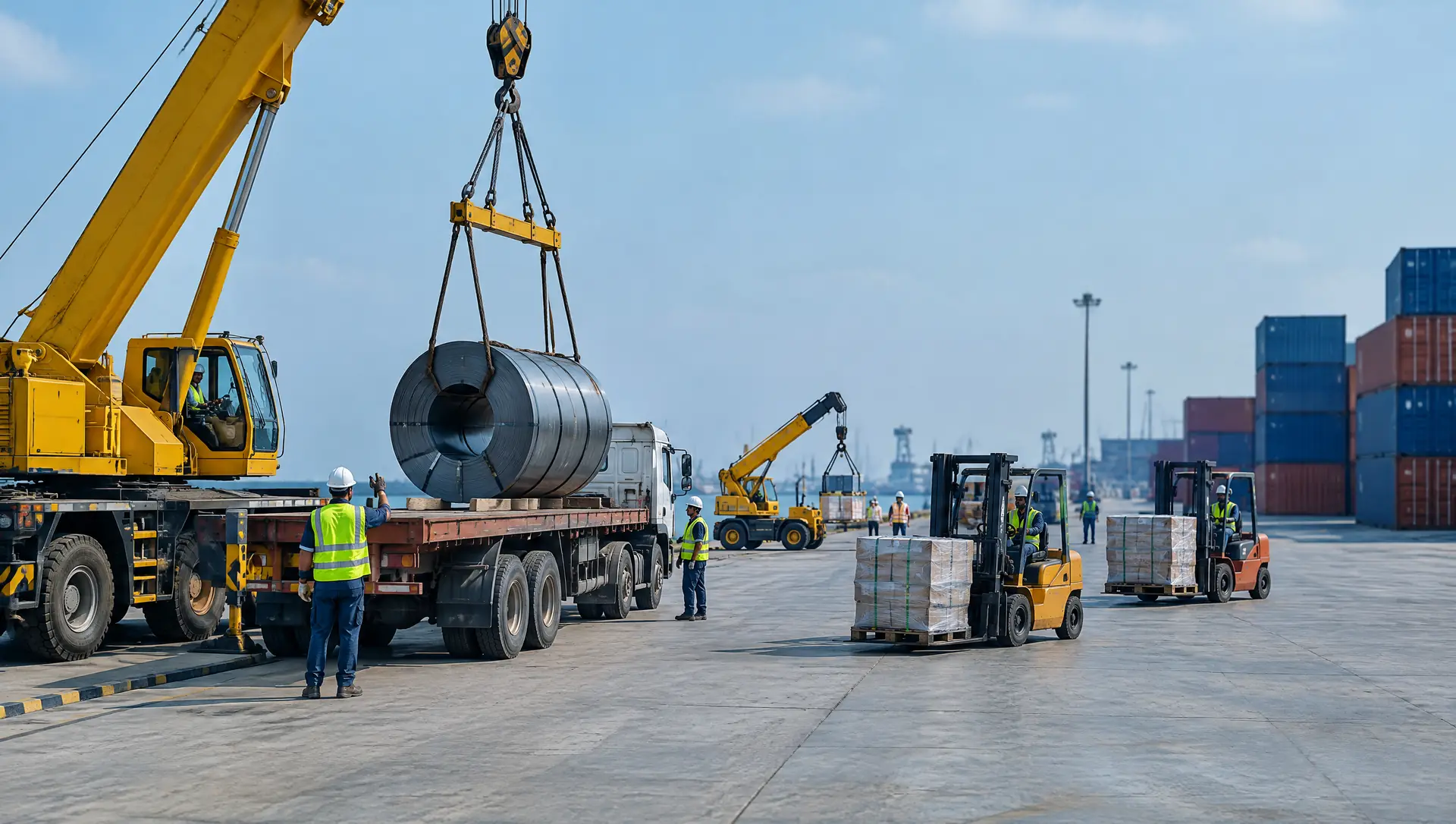
Heavy lifts at the quay, such as machinery, steel coils or project cargo, leave little room for improvisation. A short planning routine before every lift keeps people safe and keeps the cargo moving.
Start with the load
- Confirm the weight from documents, not estimates
- Check dimensions and the centre of gravity
- Identify the lifting points marked by the manufacturer
Choose the crane for the radius, not just the weight
A crane's capacity falls as the boom reaches further out. Size the crane for the heaviest lift at the longest radius needed, with a safety margin, not just for the weight of the load.
Check the ground
Outrigger loads can be very high. Confirm the quay or yard can carry them, use spreader pads where needed, and avoid slopes, soft ground and covered drains.
Pick the right rigging
- Slings, shackles and spreader beams rated for the load
- Current test certificates for every piece of lifting gear
- Protection for slings at sharp edges
Prepare the area and the team
- Set an exclusion zone and keep it clear.
- Check for overhead hazards such as power lines.
- Assign one banksman to give signals.
- Brief everyone on the sequence and on who can stop the lift.
After the lift
Inspect the cargo for damage, record the lift, and check the gear before it is used again. Small issues found early are cheap; the same issues found during the next lift are not.
How Globelink helps
Our equipment pool includes hydra cranes, a 50 t mobile crane and forklifts up to 10 t, with heavier cranes through partners. Read about our crane and forklift hire, our stevedoring and our ODC transport.
Talk to our port team
Questions about your own cargo? We will come back with one plan and one quote covering every stage.